


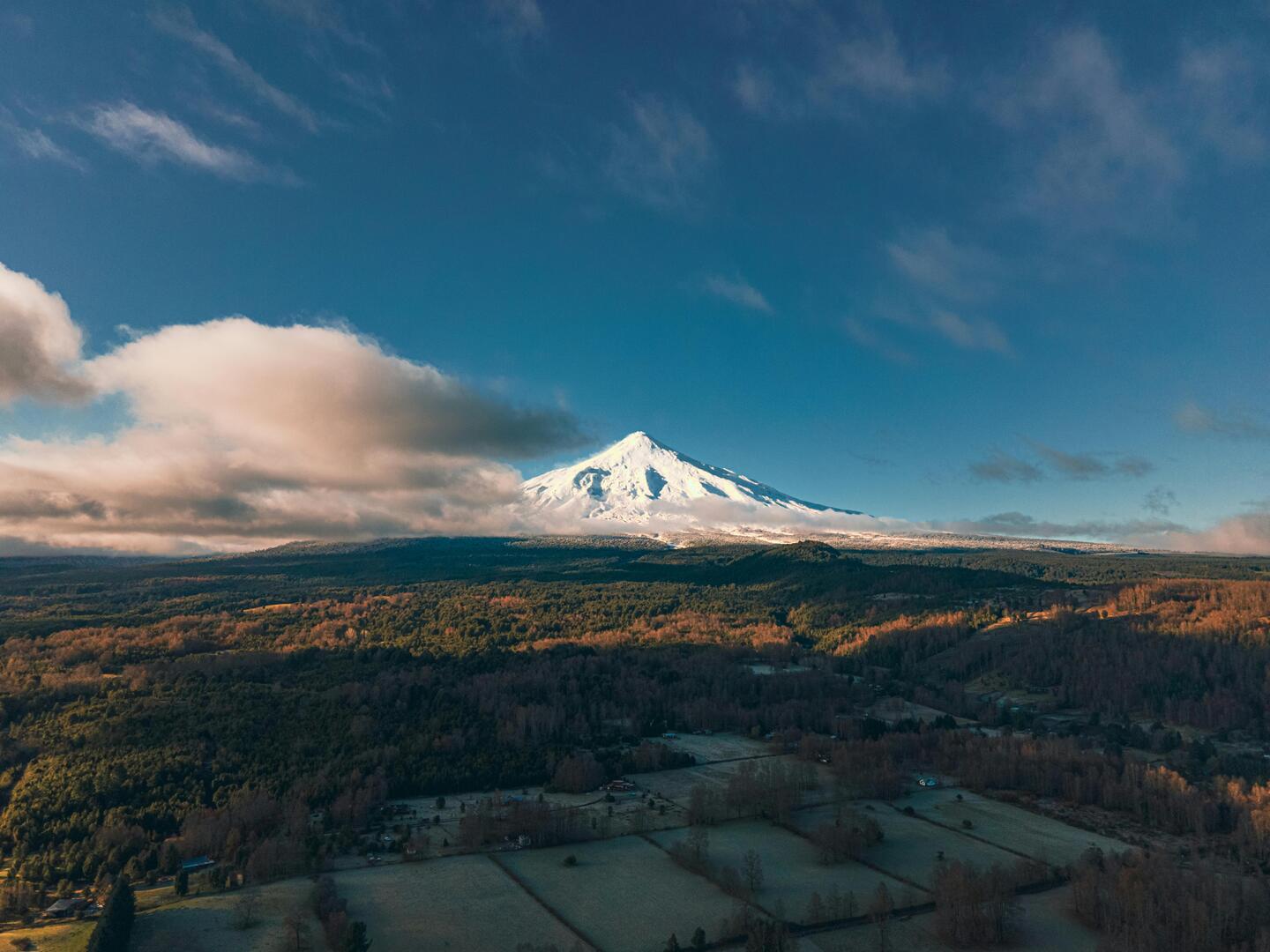
Most people buy a plot of land to build on. And the question always comes up after they’ve fallen in love with the property: Will they let me build here? The short answer is yes—country plots exist precisely for that purpose—but there are rules you should know before you sign, not after.
What Exactly Is a Country Plot?
It’s a lot of at least 5,000 m² created by subdividing a rural property under Decree-Law 3.516. It remains legally classified as rural land: it is not developed and does not have the same rights as an urban lot. You can read about how subdivision works in our guide to Decree-Law 3,516.
What you can do
- Build your home with a building permit from the commune’s Department of Municipal Works (DOM), using plans signed by an architect.
- Build storage sheds and structures that complement the residential or agricultural use of the property.
- Take advantage of simplified regulations for homes up to a certain size under current regulations—your architect will advise you on what’s best in your case.
What you cannot do (or requires additional paperwork)
- Develop or subdivide the land as if it were urban land: Article 55 of the General Law on Urban Planning and Construction requires special authorizations (SEREMI MINVU, SAG (Agricultural and Livestock Service)) for any use other than residential or agricultural by the owner.
- Covert real estate ventures: de facto gated communities, large-scale tourist cabins, or subdivisions under 5,000 m² can result in fines and demolitions.
- Ignoring the gated community regulations if your lot is within a gated community: building materials, heights, and distances to boundaries may be restricted by contract.
The three procedures that define your project
- Certificate of Preliminary Information (CIP) from the DOM: This document specifies what can be built on your land. Request it before purchasing—it’s inexpensive and helps avoid surprises.
- Water availability and power availability: In rural areas, utility companies are under no obligation to connect you. Check out our guides on water and electricity.
- Building permit and final inspection: without final inspection approval from the DOM, the house does not legally exist—you cannot sell it properly, insure it, or take out a mortgage on it.
Does the lot you’re looking at already have an unpermitted structure? In many cases, this can be regularized. The team at Osiadacz Abogados can evaluate your case, and on our website you’ll find lots where you can build with all the necessary paperwork in order.